







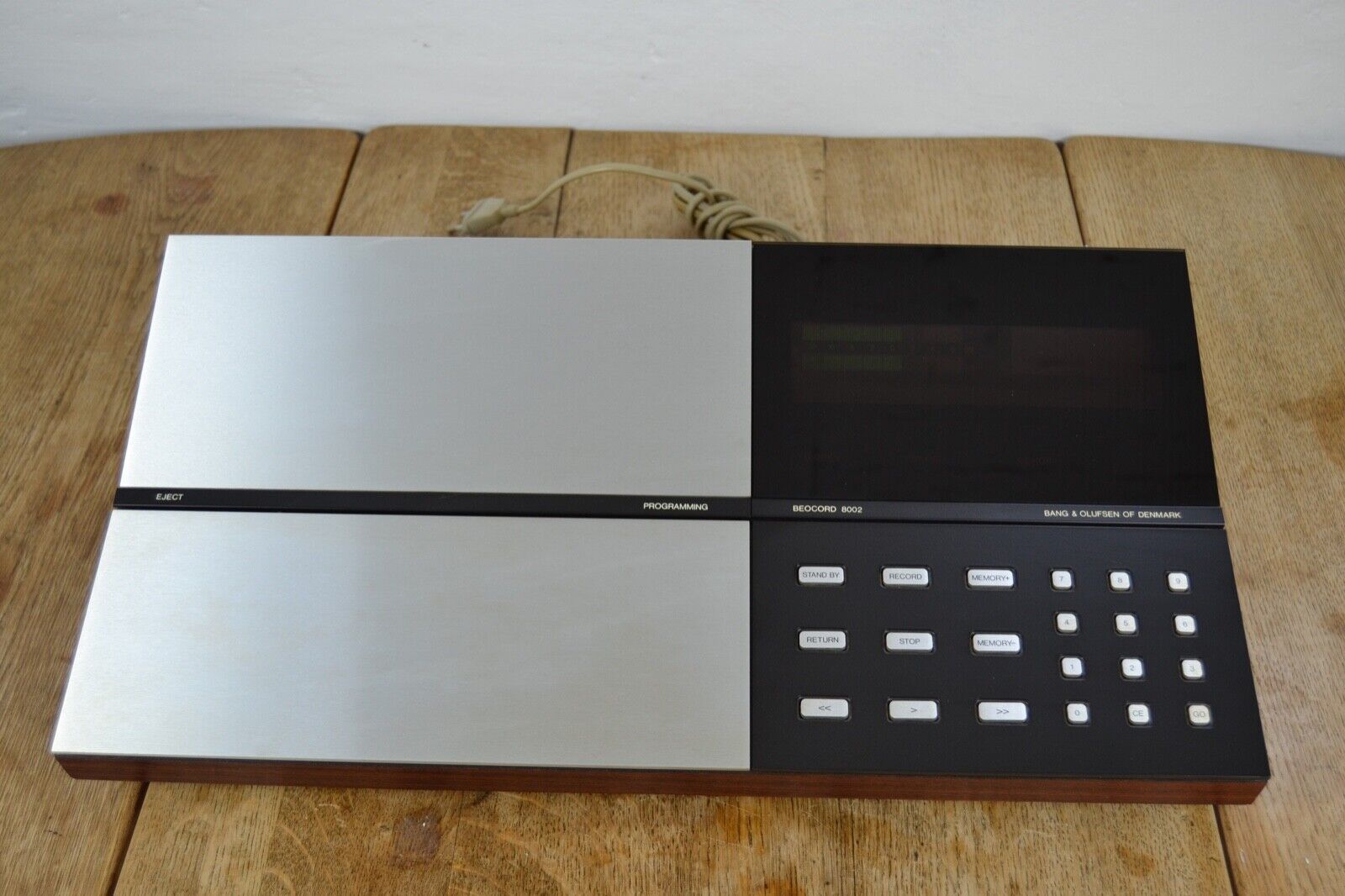
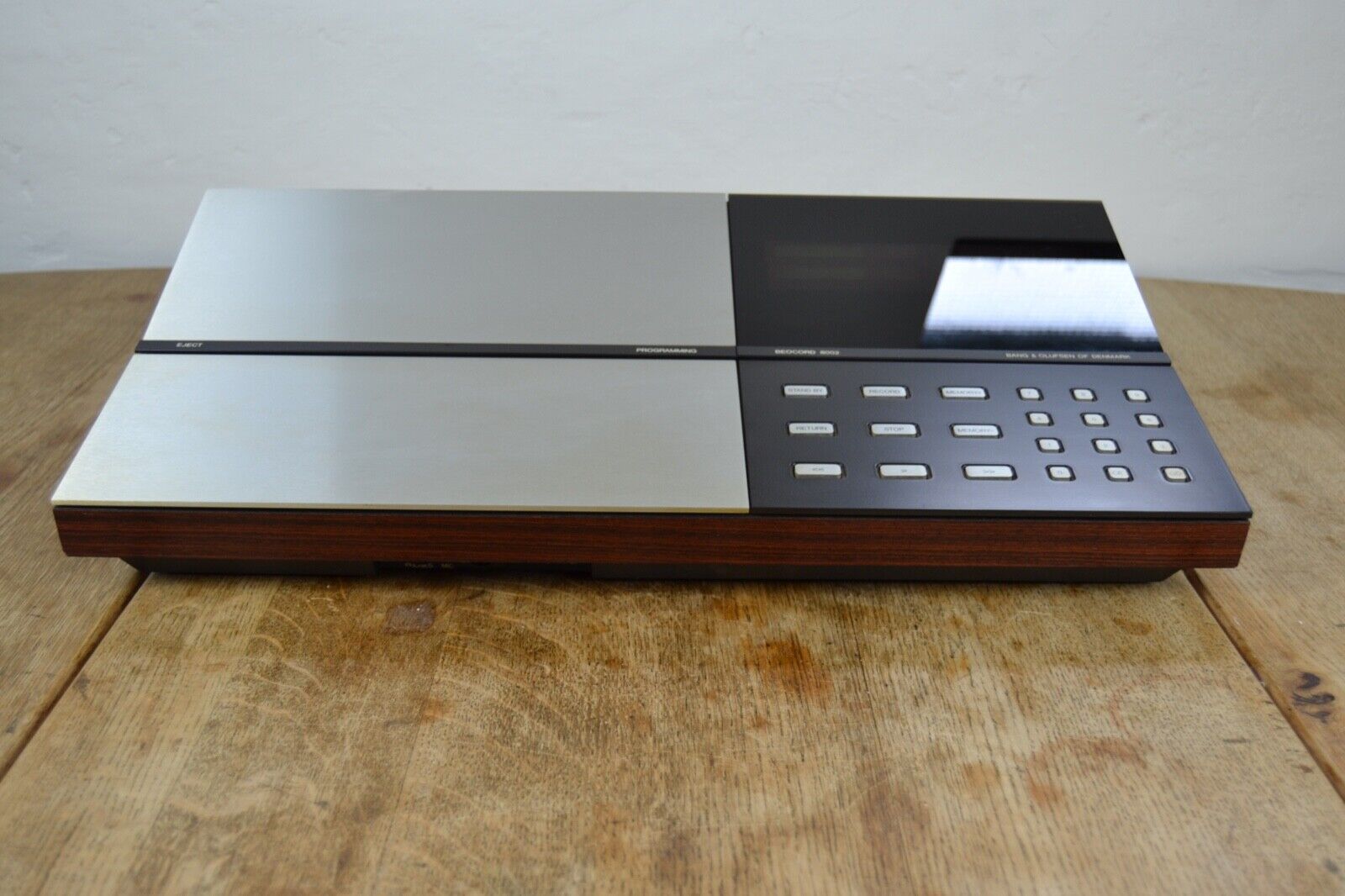
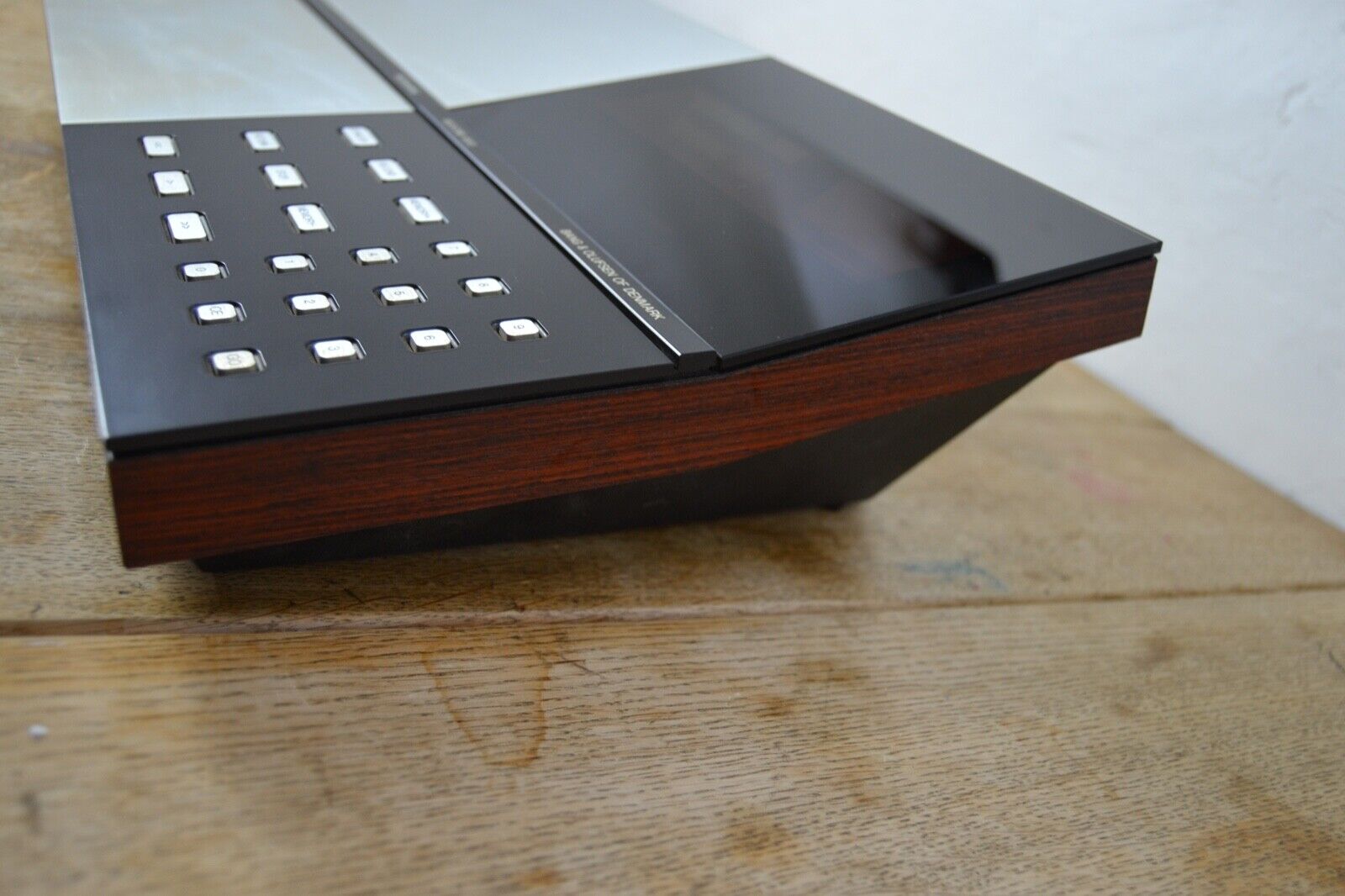

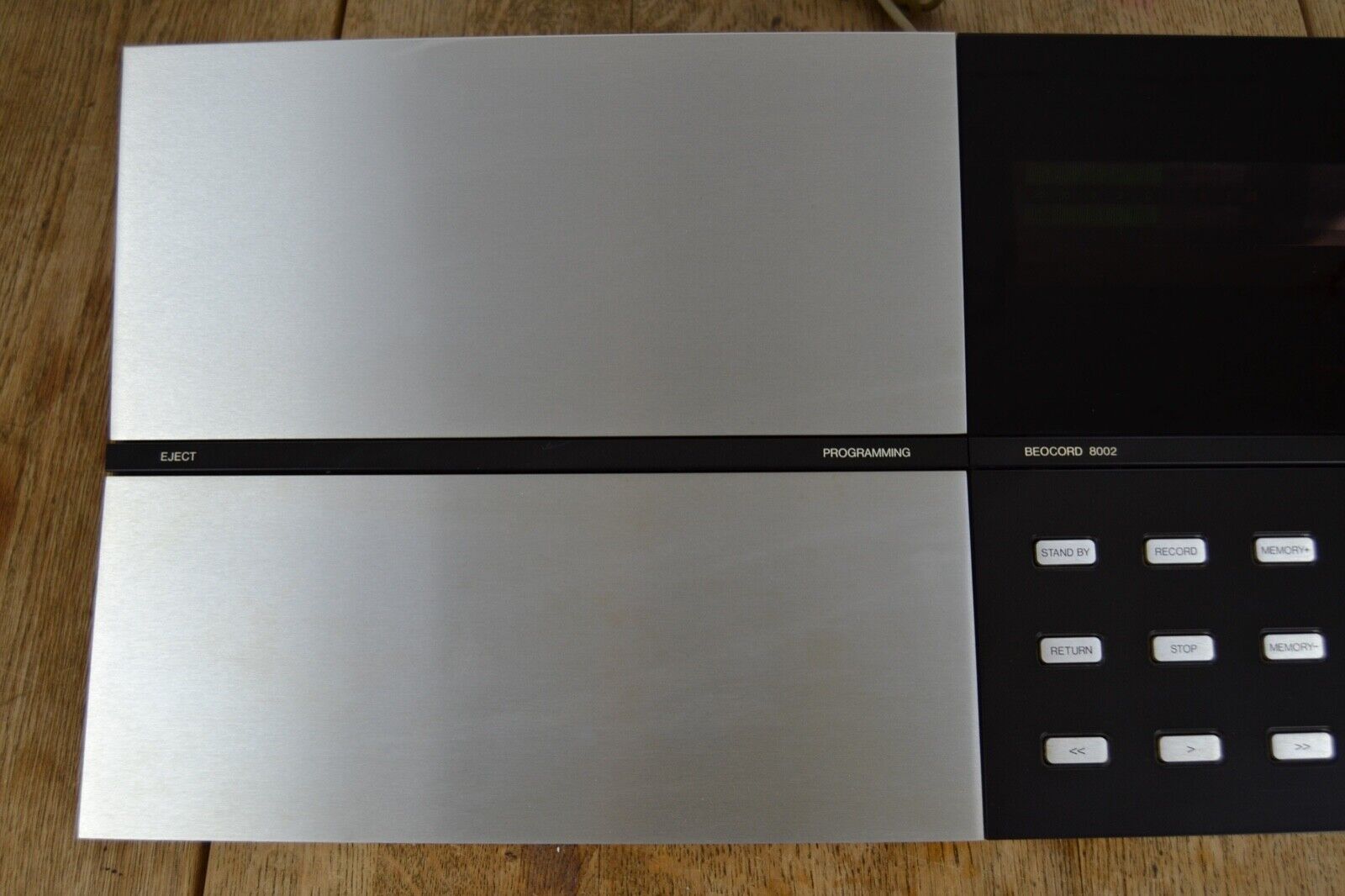

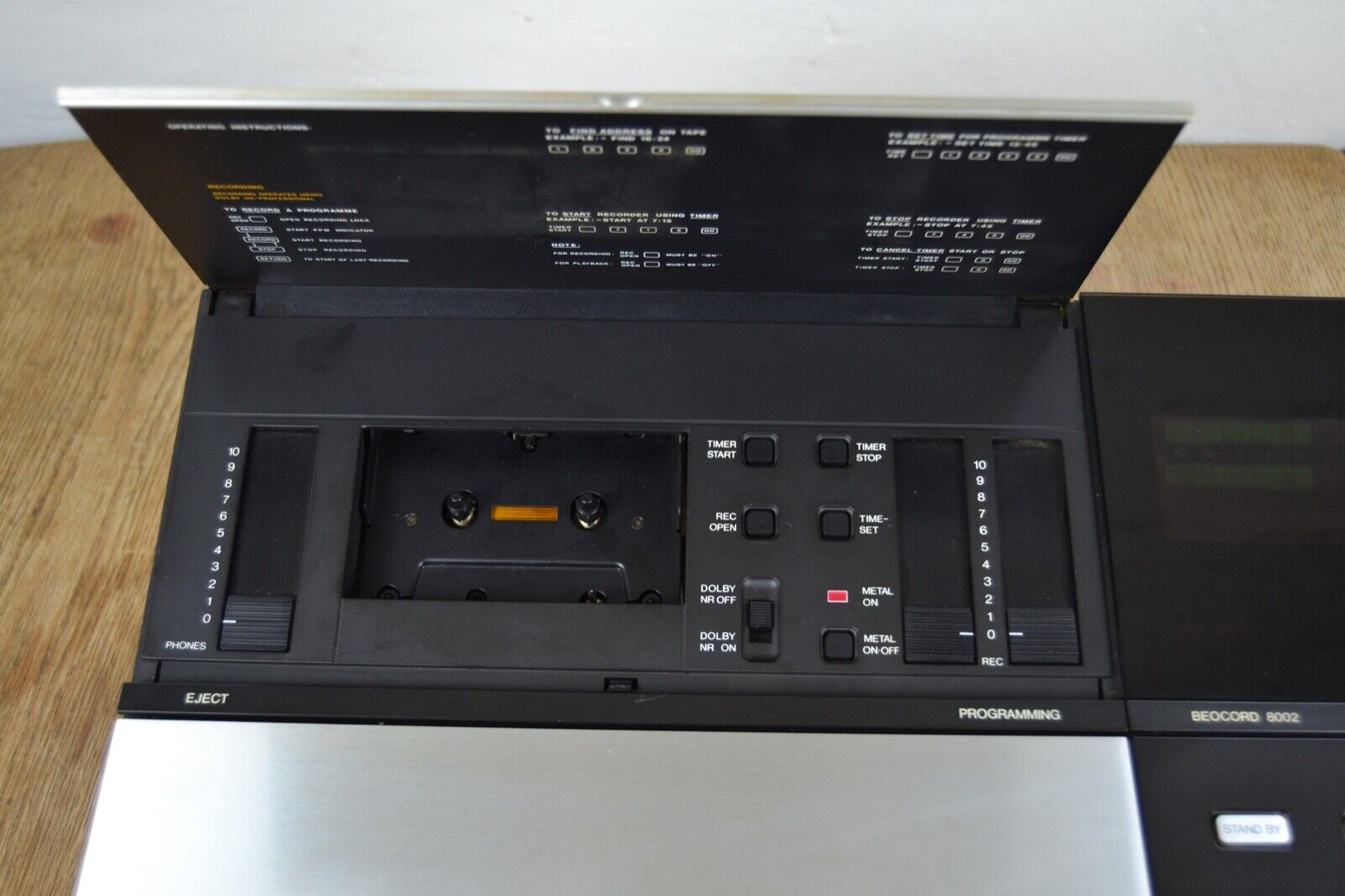
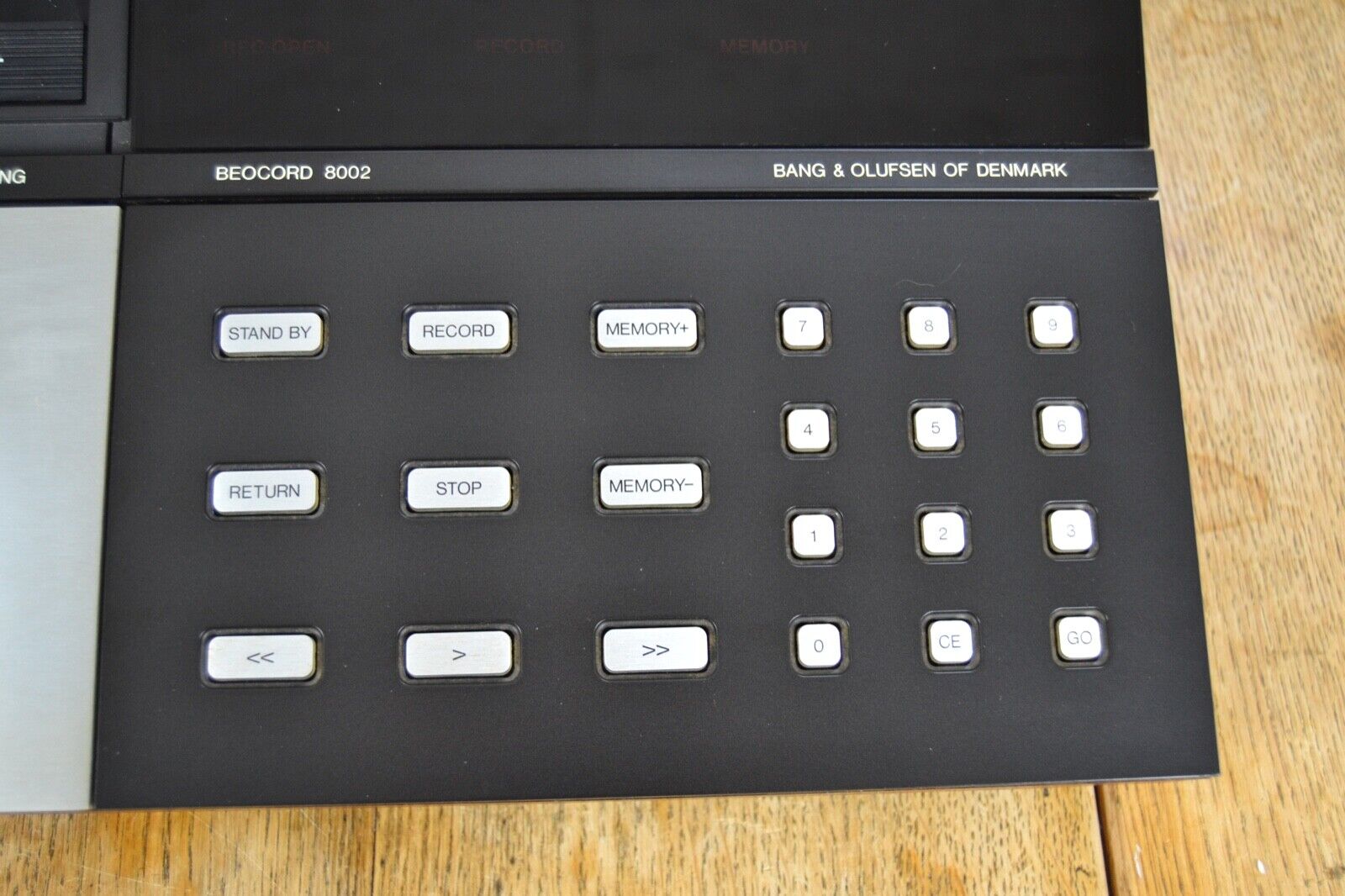
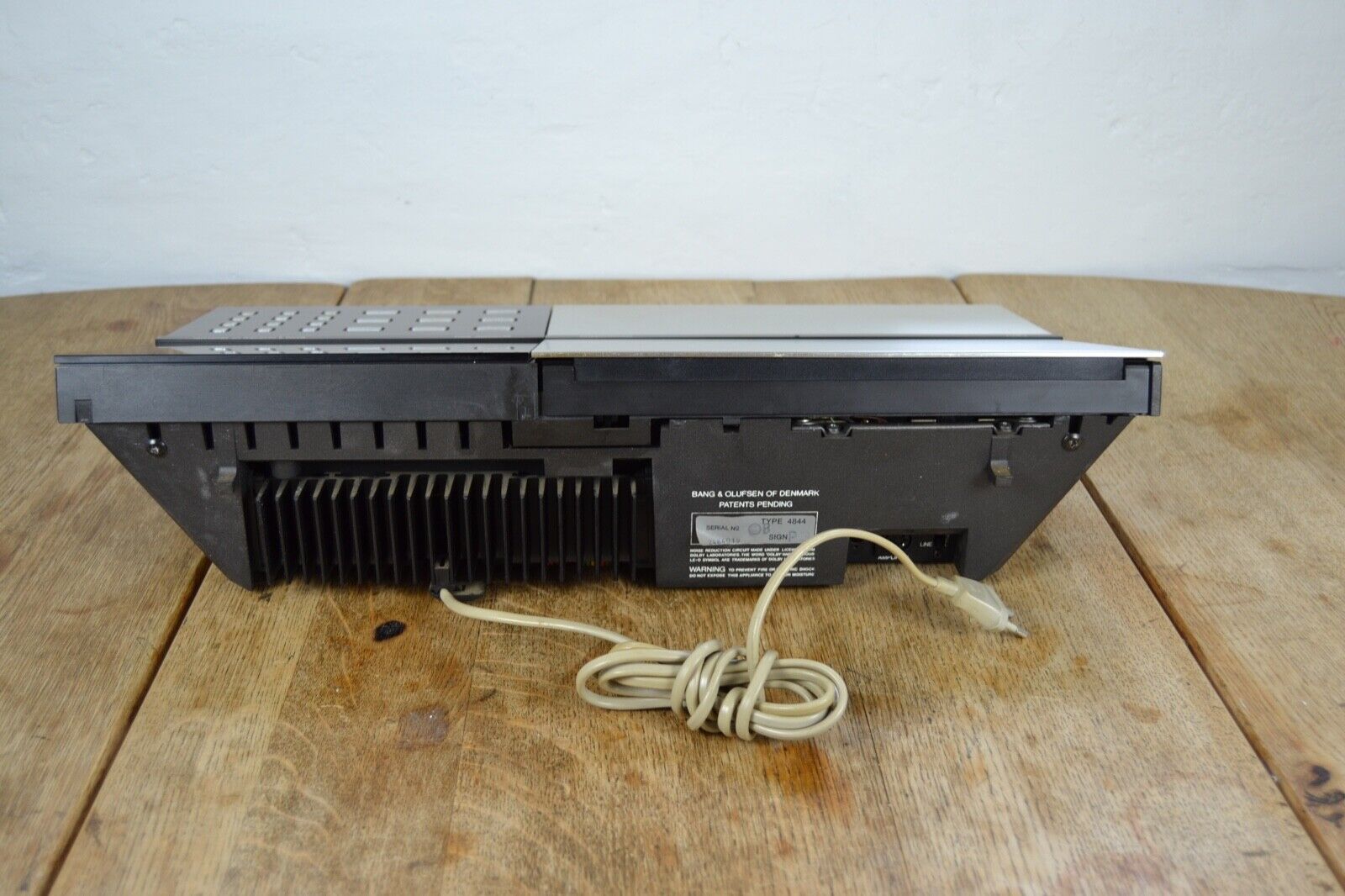

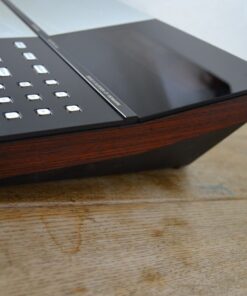
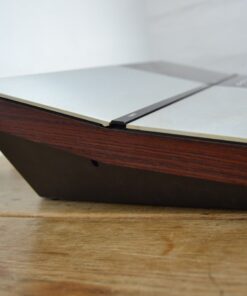
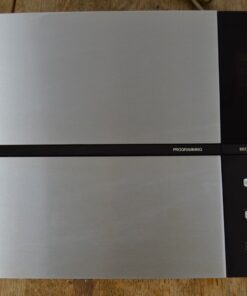
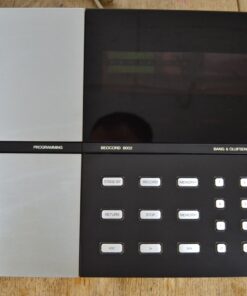
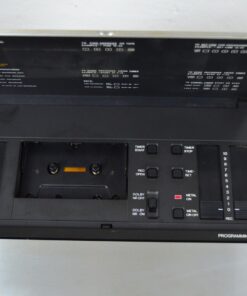
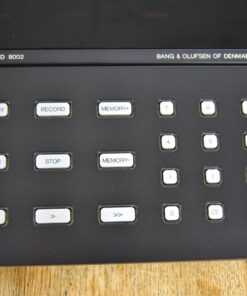
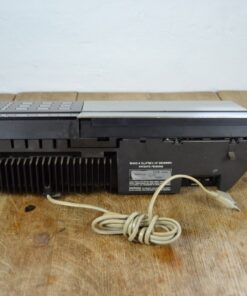
Bang & Olufsen Beocord 8002
Manufactured: 1981 – 1982
Designer: Jacob Jensen
Colours: Teak, rosewood, oak, white
Bang & Olufsen Beocord 8002 was one of Europe’s most advanced cassette recorders, yet electronic automation made it by far the easiest to use. Microcomputer control meant operational errors were impossible.
A new development – the Dolby HX Professional recording system or ‘HX-Pro’ automatically optimised bias levels relative signal content, thus ensuring professional standard recordings every time, no matter whether you used, ferric, chrome or metal tapes. In addition Beocord 8002 had the ability to indicate recorded and playback time in minutes and seconds so you could plan your recordings economically.
Finding the start of a particular track was automatic: you just had to key in the required ‘address’: computer logic then found it for you. You could also program the deck to make unattended recordings at any given time within a 24-hour period.
When coupled to Beomaster 8000 all recording and playback functions could be operated by remote control using the BeoLab terminal. Beocord 8002 could be used as a stand-alone tape cassette recorder or as part of hi-fi systems such as Beosystem 6000 or Beosystem 8000.
The second generation of this series of tape recorders, replacing Beocord 8000, introduced a new type of recording system which B&O would later licence to other manufacturers all over the world.
The HX Pro (Headroom eXtension) system worked by adjusting the depth of the bias current during recording, so that when a strong signal was recorded, the bias level favoured a wide frequency range, and when a weaker signal was recorded low background noise was the priority. The improvement in performance was certainly worthwhile, and all types of tapes and recordings benefited from the process. In particular it enabled really good recordings to be made of ferric tape, useful for making cassettes for the car players of the day, few of which offered the correct equalisation for chrome.
Another addition was that Metal particle tapes could be used. Since the standard for the sensing hole had not yet been fully agreed by all the cassette makers, both automatic and manual means of selecting the Metal position were fitted.
PRODUCT CONDITION
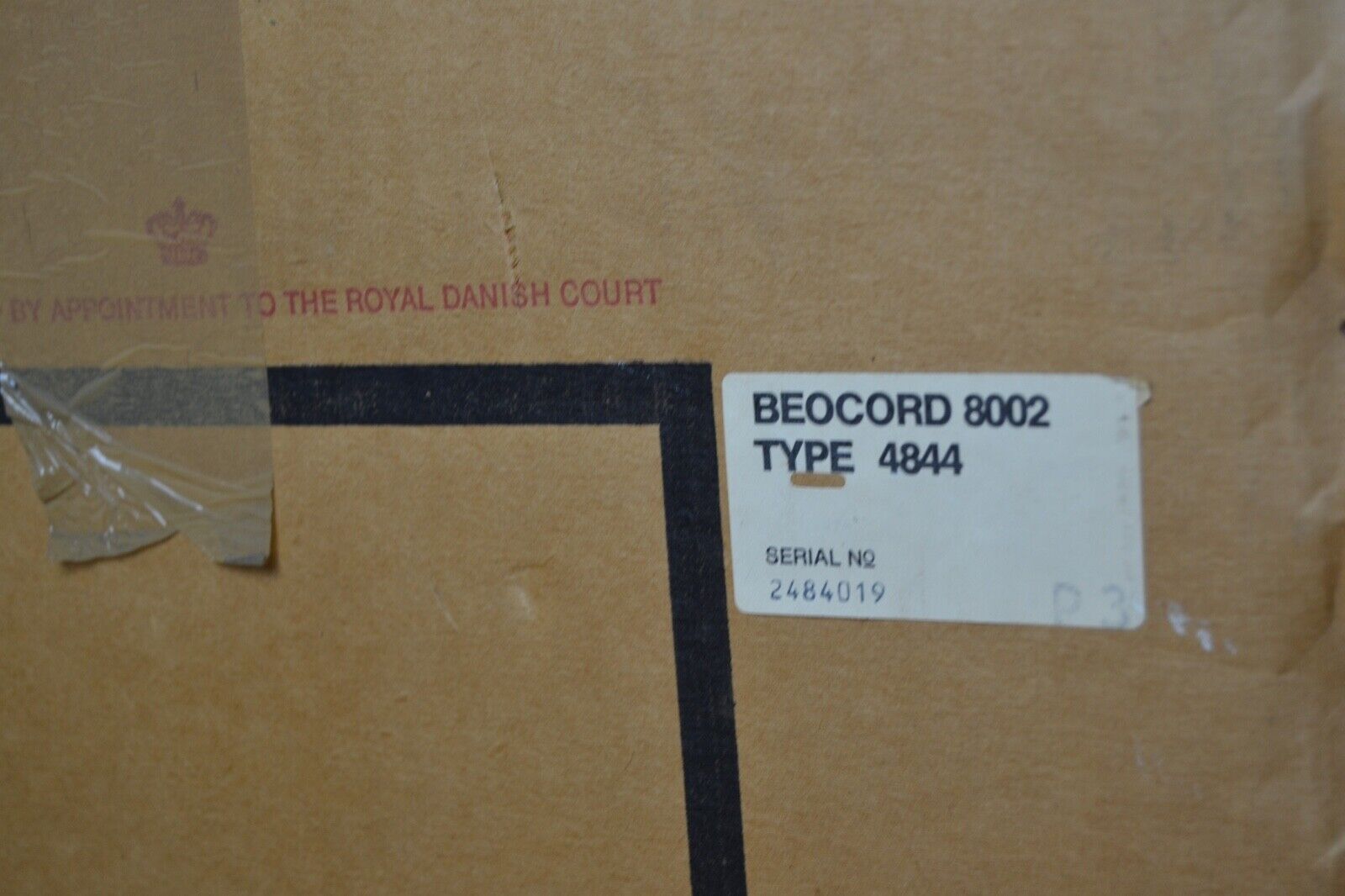
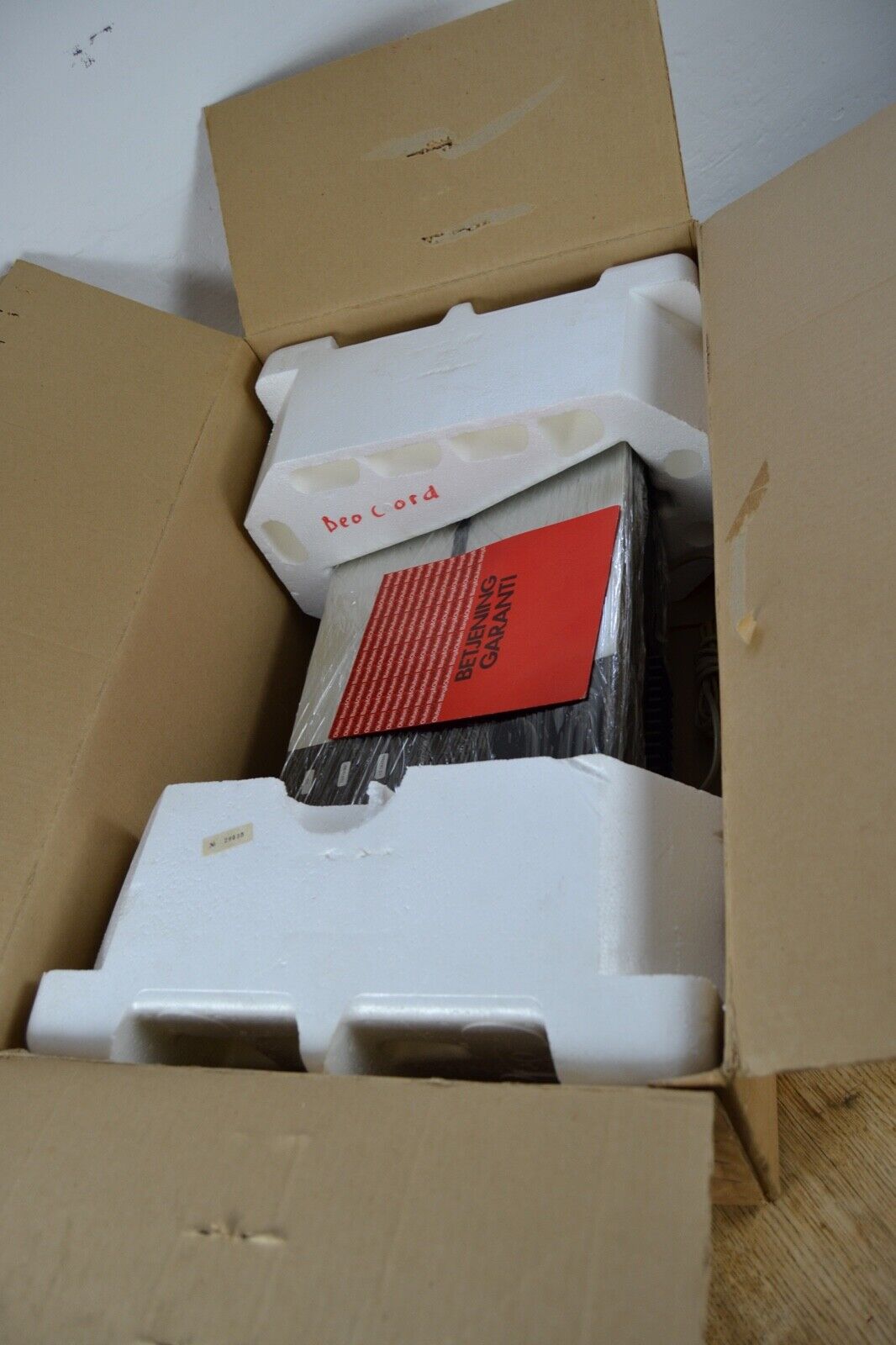
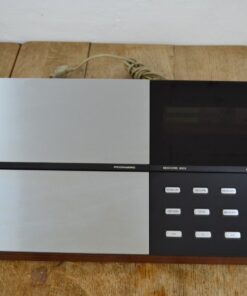
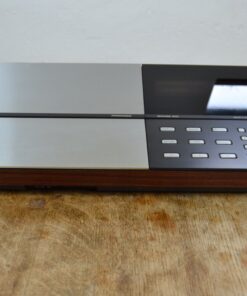
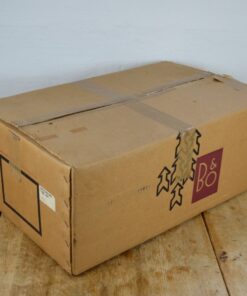
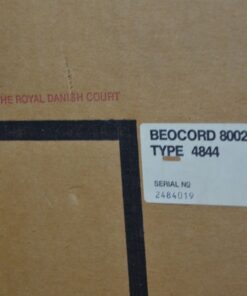
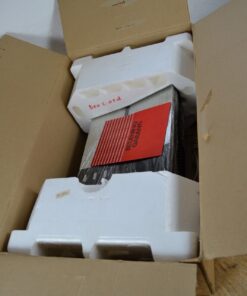
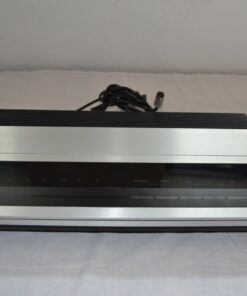
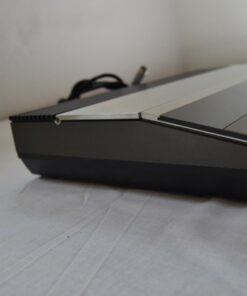
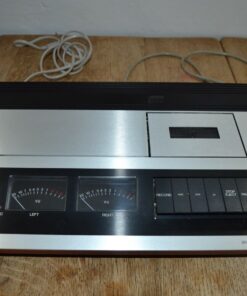
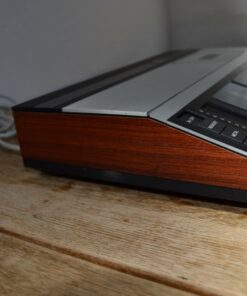
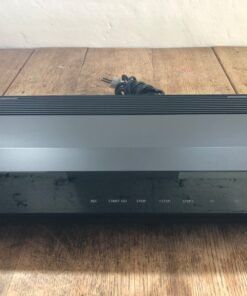
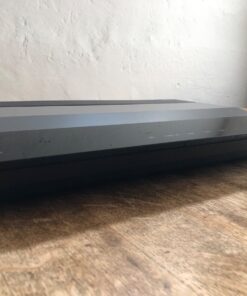
Beautiful Beocord 8002 from Bang and Olufsen. Cosmetically, it looks really nice. Technically, it is serviced. The running gear disassembled, cleaned and lubricated, drive belts and intermediate wheels replaced, speed adjusted. Module 3, pb / rec rep, rubber legs under the bottom replaced, cleaned and finally tested. Coming in original box
PRODUCT SPECIFICATIONS
Types:
4844 (1981 – Feb 1982)
AUS 4846 (1981 – Nov 1981)
GB 4845 (1981 – Sept 1982)
J 4847 (1981 – July 1981)
USA 4842 (1981 – Oct 1982)
Compact cassette C46-C60-C90-C120
Tape head Sendust
Noise reduction Dolby B
Tape switch Auto. ferro/chrome/metal
Wow and flutter DIN: <+/- 0.1%
Speed deviation: <+/- 1%
Fast forward and rewind: C60 70 sec.
Frequency range chrome/metal/ferro
20 – 20,000 Hz +/- 3 dB
Signal-to-noise ratio metal Dolby NR: >68 dB
Signal-to-noise ratio chrome Dolby NR: >66 dB
Signal-to-noise ratio ferro Dolby NR: >64 dB
Power supply:
Type 4841 114V
4842 120V
4843 127V
4844 220V
4845 240V
4846 240V
4847 105V
Power consumption Max. 50 W
Dimensions W x H x D: 53 x 13 x 30cm
Weight 7.5 kg
Connections: Microphone 0,1mV/3 kohms
AUX 100mV/56 kohms
Headphones 10V/56 ohms
Be the first to review “Bang & Olufsen – B&O – BeoCord 8002 Cassette Deck – Rosewood – BOX”
Related products




Reviews
There are no reviews yet.